How I Used AI to Train for My First Open-Water Podium
From swimming to stay active after a back injury to third place in Masters 30 at Blue Arico. What helped, what went wrong and why this was much more than asking a chatbot for a training plan.
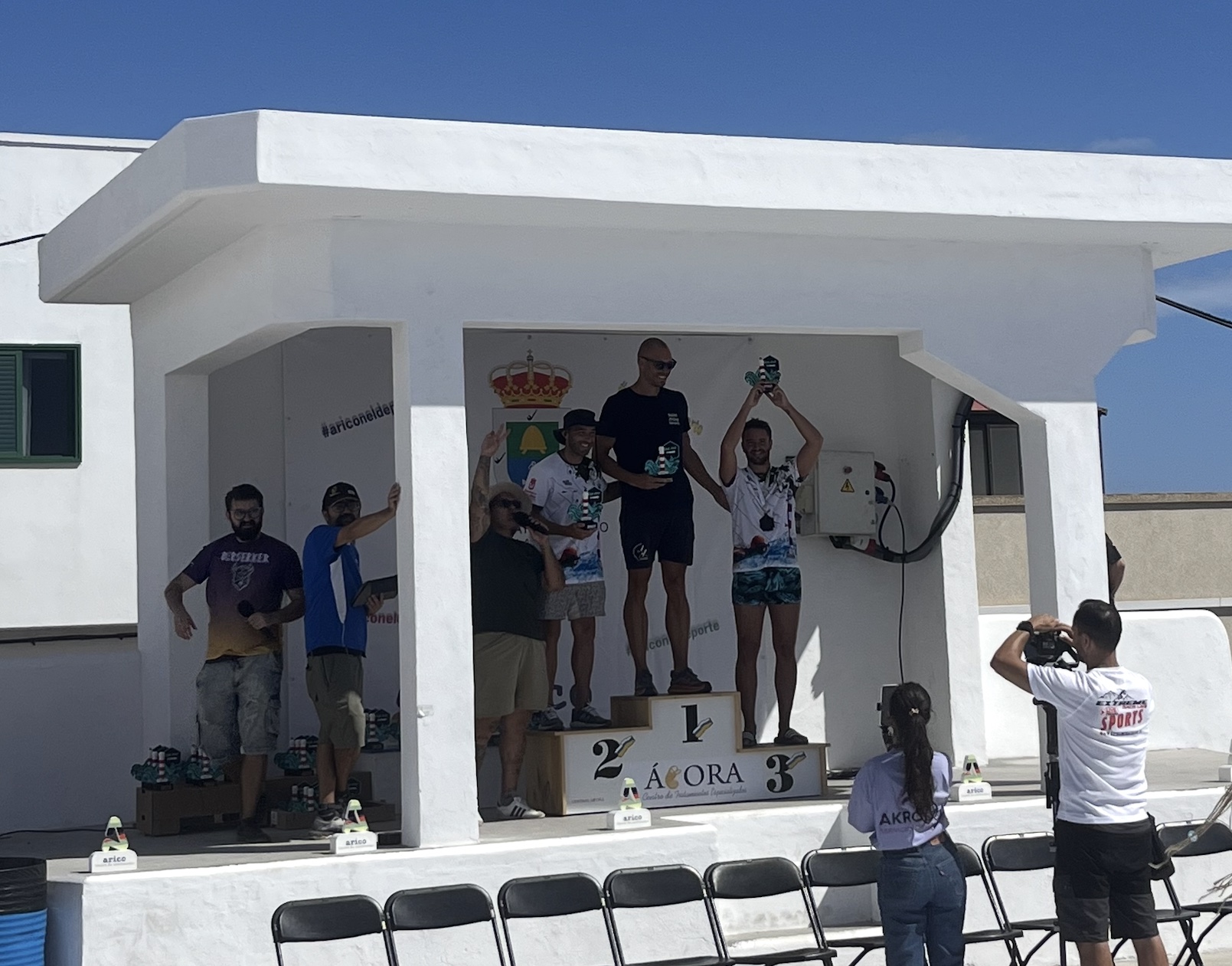
I started swimming again because I wanted to avoid losing strength after a surfing injury, just a few months later I finished third in my age category at an open-water race sharing the podium with a competitive club-trained swimmer and a world champion. Between those two events, I had a very long conversation with an AI assistant that I call "Swimming Coach".
That sounds like the setup for a post claiming that AI can replace a coach, it isn't. But it did become a substantial part of how I organised my training, understood my results and prepared to compete independently.
I'm a software engineer. I'm used to working with AI on problems where the output is code, an explanation or a design. This time, the output was a session written on paper beside a swimming pool. The feedback arrived as split times, fatigue and occasionally a very clear reminder that I'd gone too hard.
New to racing, not new to open sea water
There is an important qualification to the “no previous experience” part of this story.
I had swum competitively between the ages of ten and fourteen, I had also spent more than fifteen years surfing and bodyboarding so I wasn't learning to swim from scratch and of course I feel at home when in the sea.
What was new was preparing independently for open-water competition as an adult. At 38 after an injury flare-up, I decided to take a break from surfing and bodyboarding and swimming gave me a way to stay active and remain connected to the water. I started with roughly a kilometre per session and gradually built up to three. I am now swimming around 20km per week.
By the time the training conversation became serious, I was already swimming regularly. The AI didn't create that initial habit. I enjoyed being in the water, my body was feeling better and I wanted to continue. What I didn't have was a clear way to turn that consistency into race preparation.
How hard should I swim? How much rest belonged between repetitions? Where did strength training fit? Was doing more distance the answer, or was I just getting better at completing the same session? Those became the questions behind the experiment.
The useful part wasn't the first plan
An AI can produce a convincing-looking training schedule very quickly. That wasn't the part that ended up mattering most to me. The useful part was being able to return after a session and say what actually happened.
I shared my background, available equipment, work schedule, race goals and injury history. I uploaded photographs of handwritten sessions and reported times, recovery intervals and how the effort felt. Some days the conversation was about a race-specific block, other days it was about whether to move a strength session because work had disrupted the week.
We built plans containing easy swimming, threshold work, short speed repetitions, longer continuous efforts, open-water practice, strength and recovery. I printed them and took them to the pool.
Then reality edited the plan.
Sometimes a session was easier than expected. Sometimes I misunderstood an instruction. Sometimes I had slept badly or hadn't eaten enough. Sometimes I felt great and turned a controlled workout into something much harder than intended. Instead of treating the PDF as a contract, I could bring that information back into the conversation.
That was the value: not one exceptional prompt, but a sequence of small decisions with context.
The stopwatch became part of the conversation
One early benchmark was a 400-metre effort in 6:00, followed by 200 metres in 2:43. Using those times, we calculated a critical swim speed estimate of 1:38.5 per 100 metres. It gave us a starting reference, but it also became a lesson in how easily a precise number can acquire more authority than it deserves.
I later completed repeated 100s substantially faster than that and challenged the prescribed pace. I also realised I might have started the 400 too aggressively and paid for it later.
There were several possible explanations, not one obvious answer. My pacing might have distorted the test. Short repetitions with rests weren't equivalent to continuous swimming. The model's interpretation could also be wrong.
At times, the AI was too quick to conclude that the original estimate must be too slow. Looking back, that deserved more caution. A fast set doesn't establish a new physiological threshold just because the explanation sounds confident.
What made the conversation more useful was giving it better information.
“Those 100s were fast” was less useful than “I rested twenty seconds between them, swam an easy 200 between blocks and finished feeling exhausted.” The same times meant something different when I described the recovery and effort honestly.
Longer repetitions helped too. One aerobic session produced three 600s in 10:01, 10:08 and 10:04, with thirty seconds of rest. I finished feeling I could keep going. That told us something different from a fast 25 or an all-out 100.
As an engineer, I recognised the problem immediately: a number without the conditions that produced it is incomplete data.
I had to stop turning training into a daily competition
I like pushing myself. That helped me become consistent, but it also created a recurring problem. If the plan said “fast,” I sometimes heard “maximum.” If a session felt manageable, I wondered whether it was ambitious enough. When I see someone fast in the next lane, I often push myself harder than what's planned.
One session made the cost obvious.
I completed sixteen 25-metre sprints, with times between 13.87 and 14.57 seconds, taking roughly sixty to ninety seconds of recovery. The repetitions felt good and explosive but when I tried to continue with the next block, I had almost nothing left and had to cut the session short and finished with easy swimming.
My first reaction was partly positive: surely this meant I was finally training near my limit.
But I'd also changed the workout. The original session hadn't been written as sixteen individual maximum efforts followed by another demanding block. That became one of the most useful recurring discussions: what was the session actually trying to accomplish? Being able to swim faster didn't automatically mean I should. Finishing exhausted wasn't the only evidence that training had worked. I needed to arrive ready for the next important session, not just produce an impressive number today.
I didn't learn that once and become perfectly disciplined. I kept needing the reminder.
The AI was helpful. It was also sometimes wrong.
This part belongs in the story, because removing it would turn an experience into an advertisement. The assistant sometimes underestimated what I could do, it also sometimes became too enthusiastic after a good result. Those are not opposite problems: both can happen when a model draws a strong conclusion from limited information.
There were training-volume sums I needed to check, changes of recommendation as new details emerged and explanations about symptoms that sounded more certain than they should have.
I pushed back. I asked why a pace had been chosen, I clarified when a reported time excluded rests, I corrected assumptions about my swimming background, I explained when “I could do more” meant another two repetitions with recovery, not another kilometre without stopping. That back-and-forth was useful, but it wasn't a substitute for expertise or independent checks.
My injury history and a persistent shoulder-area complaint made that especially important. I saw a physiotherapist and I also had setbacks during the broader preparation, including time away from swimming. This wasn't an uninterrupted progression from injured to competitive.
I wouldn't describe the AI as having diagnosed or healed me. It couldn't examine me, observe my stroke from our text exchanges or know whether my account of a symptom was complete.
The role I found useful was helping me organise information, understand the proposed training and consider adjustments. It wasn't giving the model final authority over my health. I was both the swimmer AND the coach at some point, I started to feel I was doing things right.
Then there was an actual race
Blue Arico was a 1,350-metre open-water race. My original plan aimed for 22:30–22:40, with an ambition of reaching the category top ten reviewed from previous editions rankings.
The official Blue Arico classification recorded:
| Result | Blue Arico |
|---|---|
| Time | 20:48.27 |
| Overall position | 15th |
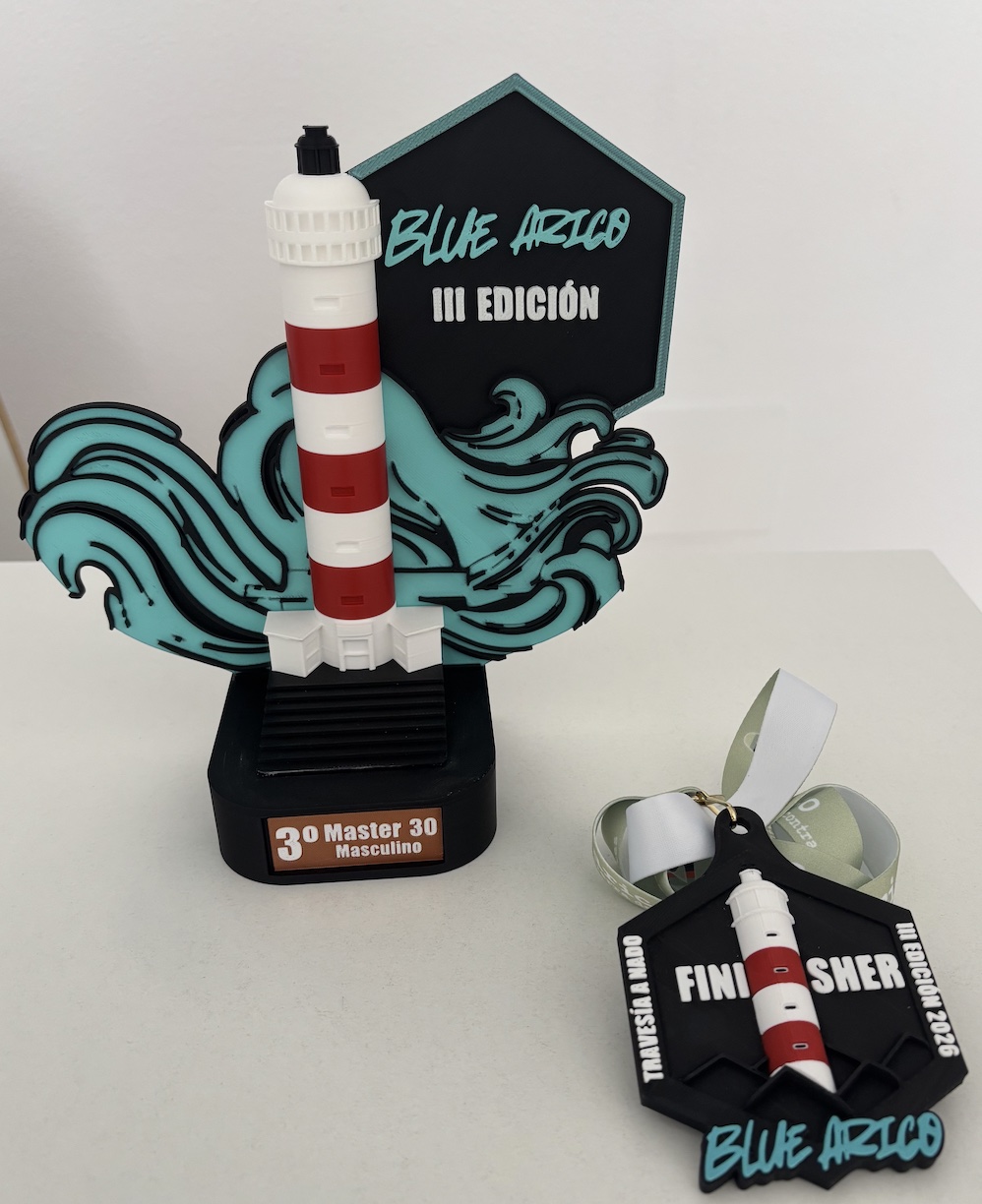
| Masters 30 men | 3rd |
| Gap to second in my category | 0.64 seconds |
| Gap to the category winner | 35.64 seconds |
I beat the original time target by about a minute and forty-two seconds, I didn't reach the category top ten I actually reach the category podium! registered as an independent swimmer.
The winner of my category was Sergiy Khilko of Club Tenerife Masters, who finished in 20:12.63, 35.64 seconds ahead of me. He was also a world masters champion: Khilko won the men's 50-metre breaststroke in the 30–34 age group at the 2017 FINA World Masters Championships in Budapest, clocking 29.28 seconds. You can find the result in the official FINA results, page 230.
That's a world masters title in a pool sprint event, not an open-water world title. The distinction matters, but sharing a category podium with someone who had won at that level gave the result an extra dimension I hadn't expected.
The race also exposed something that pool splits couldn't fully capture.
I had a good start and settled into the fast heading group. My intention was to stay with them and use what I had left near the finish but around 300 metres from the end, another swimmer overtook me and started zig-zagging in front of me. I paused and repositioned, and shortly afterwards I lost contact with the group.
I can't know exactly what that swimmer intended. What I do know is that the situation disrupted me, and I didn't manage the transition as well as I wanted.
That is a different training problem from swimming a faster 100. It gave me something concrete to work on: holding my own course, responding to changes around me and recovering a useful position without losing the group.
The bronze was extremely satisfying, the sixty-four hundredths to silver were motivating and the result gave me a much better reference than another optimistic prediction in a chat window.
What I actually credit the AI with
I can't tell you what my finishing time would have been without it. This is one person's experience, not a controlled experiment. My childhood swimming background mattered and so did years in the sea, consistency, access to a pool and the time I could devote to training. I still had to do every length.
What I can identify is the practical help.
The AI helped turn a general intention to improve into sessions I could execute. It helped me ask more specific questions about pacing, rests, strength, equipment and recovery. It gave me a place to bring the results and revise the next decision without starting the explanation from zero each time.
I didn't need a custom application or a complicated automated system. Much of the process was ordinary: photographs of paper plans, messages after swimming and conversations about why one session had gone differently from another.
There was also an educational benefit. I gradually became better at describing effort, understanding the purpose of a block and recognising when I had changed the workout rather than simply “performed better.”
For me, that is the most convincing part of the story. The AI didn't just produce instructions, I used it critically and the conversation helped me become a more informed participant in my own training.
What comes next
The next goals are a category win and an overall top-ten finish in more challenging conditions. I'm also preparing for longer races, including a five kilometres one coming next month, which means answering a different question from how fast I can swim a short interval.
I'll keep using AI, but with better reference points and more care about the conclusions drawn from them. I want repeatable measurements, clearly defined sessions and room for professional input, not a stream of increasingly ambitious predictions after every good workout.
I started swimming again because I didn't want an injury to take away an active life in the water.
I ended up with a Masters podium and a training process I want to keep developing.
The AI didn't swim the race. But it helped me organise the work around it, question the plan and understand more of what I was doing. For this software engineer, that turned out to be a much more interesting use of AI than generating another document and never opening it again.